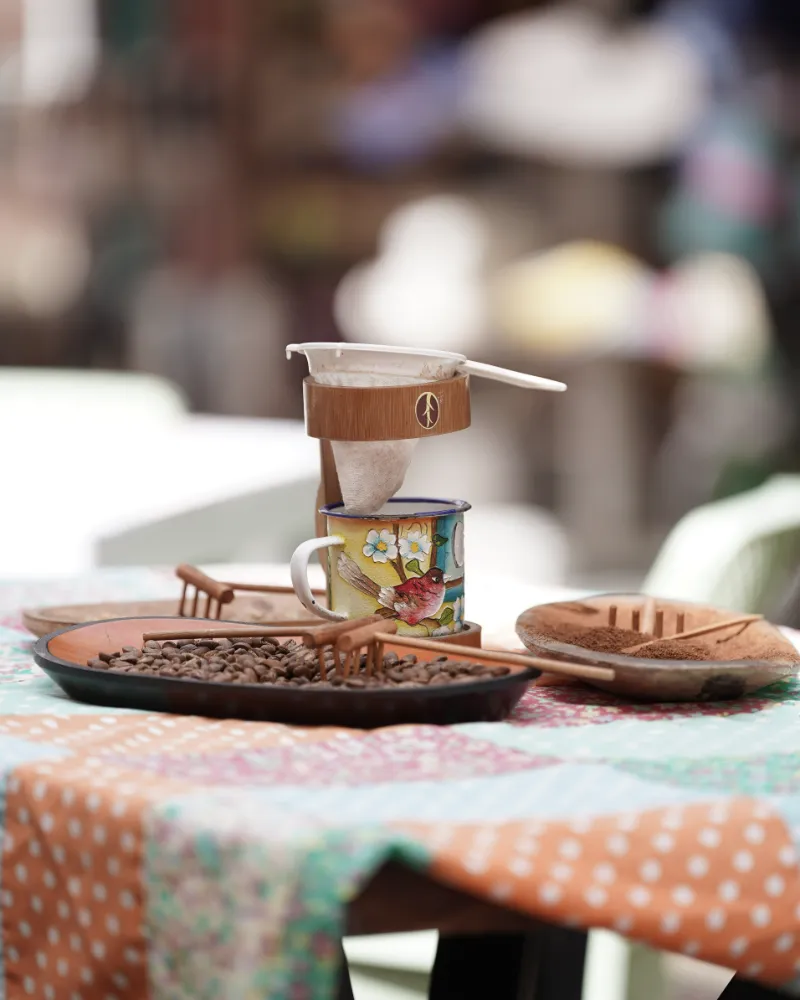
Why coffee tastes of this place, what a farm visit actually shows you, how to choose the right one and how to taste without being an expert.
In Quindío coffee is not a souvenir you buy at the end of the trip: it is the landscape you drive through, the trade of the family serving you and the reason this region is World Heritage. This guide covers what is worth understanding before you book a farm visit, so that it does not end up being a photo among green bushes.
Why the coffee tastes of this place
Three things come together here that are hard to find at once elsewhere: mountains, which force the bean to ripen slowly; soils of volcanic origin; and a harvest still done by hand, bean by bean, because these slopes leave no room for machines. That combination is also behind UNESCO's recognition of the Coffee Cultural Landscape: the listing is not for a mountain or a monument, but for a way of living and working the land that is still going.
One more thing worth knowing: coffee is not harvested all year. There is a main harvest and a smaller one, the mitaca, and the calendar shifts with the area and the weather of each year. If you want to see picking, ask beforehand — it is the part of the process that depends on the season.
What a farm visit actually shows you
A full visit follows the whole path, and every stage looks different from how it sounds:
- The nursery, where the plants spend their first months before going out to the plot.
- The picking: if the season allows, they hand you the basket and you pick. That is the moment you understand why coffee costs what it costs.
- The wet mill: pulping, fermentation and washing. Much of the cup is decided here, and it is the stage that surprises visitors most.
- The drying, usually under a canopy, with the beans turned over for days.
- Hulling and roasting, where the green bean finally smells like what you were expecting.
- The tasting, which closes the tour and gives meaning to everything before it.
Not every farm covers all six stages, and not all of them roast their own. That is the first question worth asking.
Choosing the visit that suits you
Two different trips hide under the same name. One is process: you want to understand the crop and leave knowing why one coffee differs from another. The other is landscape: you want to walk among coffee plants, have lunch with a view, and not necessarily learn to run a wet mill. Neither is better; mixing them up is what disappoints.
Before booking, confirm directly with the farm whether the tour runs in your language, how long it takes, whether it is a group or private visit, whether tasting is included and whether there will be picking on that date. These change with the season, and only the farm itself can guarantee them.
How to taste without being an expert
You do not need technical vocabulary to get something out of a tasting. Smell the ground coffee before the water goes in, sip with a little air, and pay attention to three things: whether the acidity feels bright or soft, whether sweetness shows up as the cup cools, and how much body it leaves. Then ask which variety you are drinking and how it was processed. That question usually opens the best part of the conversation.
Beyond the cup
Coffee culture is also told without a cup in hand. In Quimbaya, Parque Los Arrieros stages the muleteer tradition that opened up these mountains. And if your trip lands in festival season, the Fiestas del Café in Calarcá are the collective version of all this; the programme is confirmed each year by the organisers, so check it close to the date.
Finding it in the app
- In Explore you can filter by town and by type of experience, and see each farm on the map to know how far you are going off route.
- Every listing gathers what the partner keeps up to date: description, photos, contact, social links and activities. It is the short path to asking before you go.
- Save the ones you like and build the day in My trip, your private plan of up to five stops. It requires signing in.