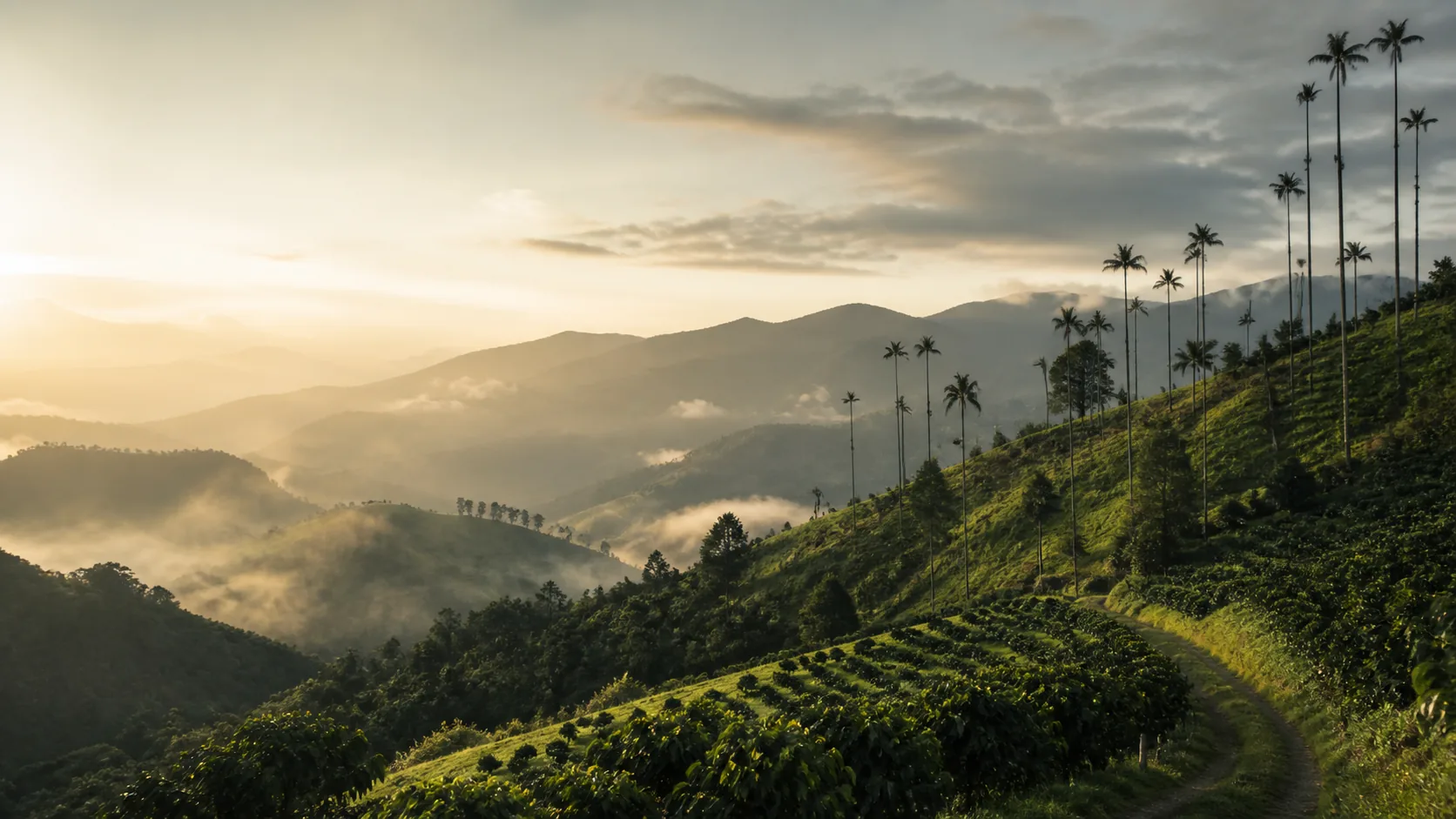
The Coffee Region is not one town, one park or one coffee tour. It is a working Andean landscape: small farms, steep green slopes, historic towns and a culture shaped by generations of coffee growers. Quindío is a good place to enter that story—and to build a trip that reaches beyond its best-known postcard.
First, what do travellers mean by “the Coffee Region”?
Colombia’s coffee-growing landscape is wider than a single itinerary. Travellers often use Coffee Triangle for the central cluster around Caldas, Quindío and Risaralda. The UNESCO-listed Coffee Cultural Landscape has a more precise heritage boundary: a series of protected landscape areas and towns across parts of Caldas, Quindío, Risaralda and Valle del Cauca. It recognises a living relationship between coffee farming, mountain terrain, architecture and community—not just a scenic viewpoint.
That distinction helps set expectations. A trip based in Quindío can make a rewarding visit to the Coffee Region, but it is not the whole region. Start with the places that matter to you, then decide whether to add another department.
Why start with Quindío?
Quindío puts several different experiences within reach: a lively heritage town, a high mountain valley, coffee farms, craft traditions and the services of Armenia, the departmental capital. You can choose one base and take day trips, or move between towns if you have more time. Mountain roads make the journey part of the plan, so group stops by area instead of trying to cross the department in every direction each day.
For a first visit, use our first-trip guide to choose a pace, and the two-, three- and five-day itineraries to shape the length of your stay. If you want the broader story of the department, read Why Quindío deserves a trip of its own.
Salento and Cocora Valley: two stops, different days
Salento is a natural first base for many travellers. Its historic centre, cafés and restaurants give you a town to explore on foot; the surrounding countryside leads into a different kind of day. Cocora Valley is known for its wax palms and mountain scenery. Treat the valley as its own outing, and check current access and conditions before you go rather than assuming that a town visit and a hike fit into the same few hours.
Start with the Quindío es Mío app to discover places and routes and see how Cocora fits into a trip through the department. If you are browsing on the web, the place directory brings together the published listings. Before visiting, confirm access and trail conditions with local sources.
Filandia, Armenia and the towns beyond
Filandia offers a second heritage-town experience, with traditional architecture, craft traditions and its own surrounding countryside. It is a useful comparison with Salento when you are choosing where to spend a night or a slower afternoon; it does not need to be treated as a lesser version of the same stop.
Armenia is the departmental capital and a practical point for services and onward travel. Beyond these familiar names, the department includes towns such as Circasia, Pijao, Córdoba, Buenavista, Calarcá, Montenegro and Quimbaya. Choose them for a reason—coffee, food, nature, a festival or a quieter stay—rather than collecting names on a map. The directory can be filtered by town and interest, and its place pages link to published details.
Coffee experiences: choose the visit, then the route
A “coffee tour” can mean different things: following the crop from picking to processing, learning how coffee became part of local culture, or tasting and comparing cups. Ask what the experience actually includes, whether it runs in your language and what needs to be confirmed with the farm. Quindío es Mío is a discovery guide, not a tour operator; check current schedules, prices and availability directly with each place.
Start with our guide to coffee in Quindío, then browse published coffee experiences. To see how several stops can form a day, follow the existing Three ways to understand coffee route through Armenia, Calarcá and Buenavista. Check the details on each place page before travelling, since schedules and availability can change.
That is the useful shape of a Coffee Region trip: understand the landscape, choose a base in Quindío, then let the places and experiences—not a checklist—set your route.