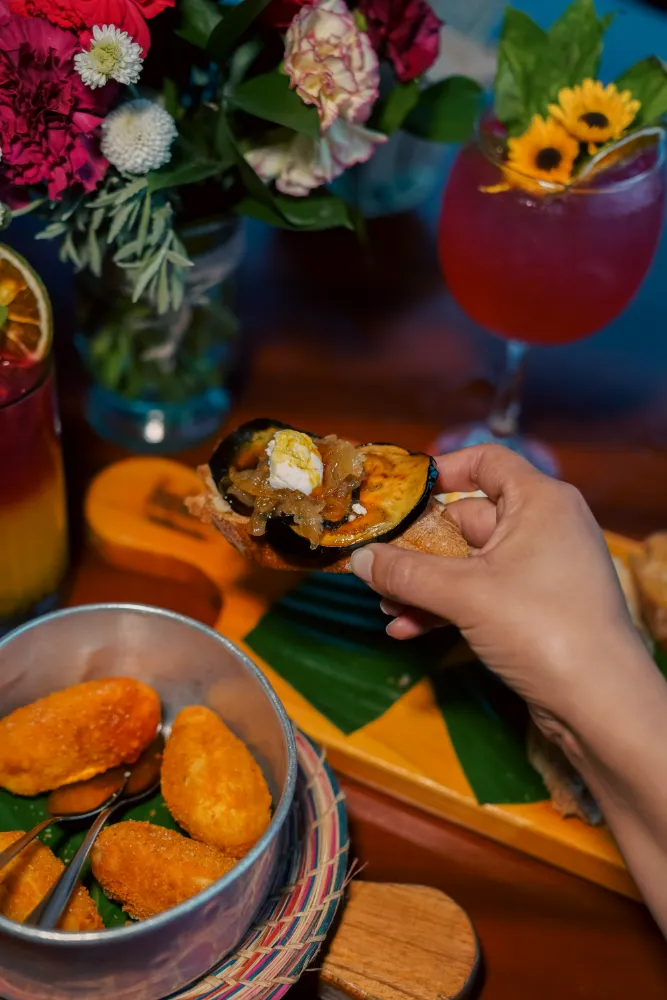
What you will actually find on a Quindío table, why trout is everywhere, where the chef-led kitchens are and how to order well as a visitor.
Quindío cooking is farm food before it is fine dining, and that is exactly its appeal: it was built to carry people through long days in the mountains and the harvest. Understanding that changes what you order. This guide hands out no stars and reviews no restaurants one by one; it explains what you will find and how to ask, so you eat well in any town.
What people actually eat
- Calentado. The local breakfast: yesterday's rice and beans fried together, almost always with egg, arepa (a flat maize cake) and coffee. This is the one that carries a walk.
- Sancocho de gallina. A thick hen soup with plantain, cassava and potato, served as a main course. It is gathering food: long tables, Sundays.
- Beans and the mountain platter. The regional version of the big plate: beans, rice, meat, chicharrón (fried pork belly), sausage, egg, sweet plantain and avocado. Do not order a starter.
- Trout. The dish you will see most, above all in Salento. It gets its own section below.
- Arepa and patacón. The arepa here is thin and understated, often topped with fresh quesito cheese; the patacón is smashed, fried green plantain and comes with nearly everything.
- Fritanga. Sausage, blood sausage, chicharrón and small yellow potatoes. Food to share, not to order alone.
- Aguapanela con quesito. Hot unrefined cane sugar water with fresh cheese sunk into it. It sounds odd and it works.
- Juices from fruit you have never met. Lulo, granadilla, blackberry, soursop, passion fruit, tree tomato. Ask for them made with water or with milk; it is the cheapest way to taste the tropics.
Trout, explained
You will find trout on menus in a landlocked department, and there is a reason: it is farmed in cold mountain-water ponds, so here it is a local product rather than an imported one. It usually arrives whole or as a fillet, in a handful of recurring preparations — garlic, seafood sauce, mushrooms — and almost always alongside patacón. If you are offered patacón con trucha as a single dish, that is exactly what it is: a generous serving on fried plantain.
Where the chef-led kitchens are
Alongside the traditional stove, a contemporary cooking scene has grown, above all in Filandia and Salento, working with local produce and current technique. Two Filandia kitchens have their story published: Helena Adentro and Cocina de la Loca. In Armenia the offering is more urban and varied, and it is usually the practical choice if you arrive at night.
How to order well
- Ask for the lunch of the day. In village restaurants the set lunch — soup, main course and juice — is the freshest and most honest thing on offer.
- Lunch is the main meal. Life turns around midday; many village kitchens close early in the evening, so check the time if you are planning a late dinner.
- Not everything is spicy. The ají chilli sauce comes on the side, usually in its own little jug. If you like heat, ask for it; nobody will add it for you.
- Carry some cash. Small businesses do not always take cards.
If you have dietary restrictions
In Armenia, Salento and Filandia you will find vegetarian options without difficulty; in smaller towns the menu narrows and it is worth asking in detail, since some soups and beans are cooked with meat even when none is visible. If you have allergies, confirm directly with the kitchen: declared allergen menus are not common practice here.
Something to take home
Municipal market halls are the best place to see the fruit that later shows up in the juices, and to buy coffee, panela and fresh cheese without a middleman. If you are taking coffee home, ask for the roast date: it is the detail that most changes what you will end up drinking.
Finding it in the app
- In Explore you filter by town and by type of experience, and every listing gathers what the partner keeps up to date: description, photos, contact and social links.
- Save the places that catch your eye and build the day's run in My trip, your private plan of up to five stops. It requires signing in.
- If you would rather read before deciding, the Passport's Flavours of Quindío gathers the kitchens we have written about.